Limited Info Re:
US Presidential Candidates &
Mental Health & Substance Use Policy
[under construction]
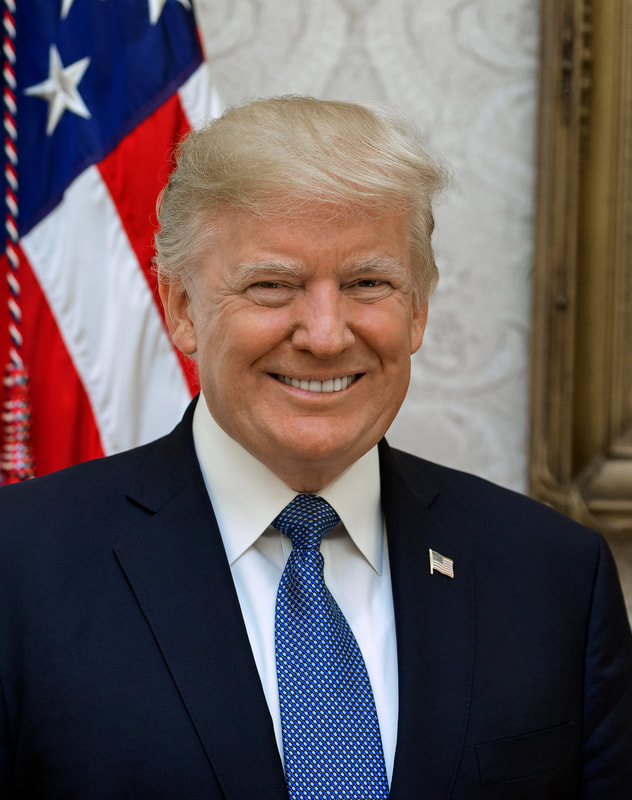
President Donald Trump
|

Democratic Presidential Candidate Bernie Sanders
|

Democratic Presidential Candidate Joe Biden
|

Former Democratic Presidential Candidate Elizabeth Warren
|
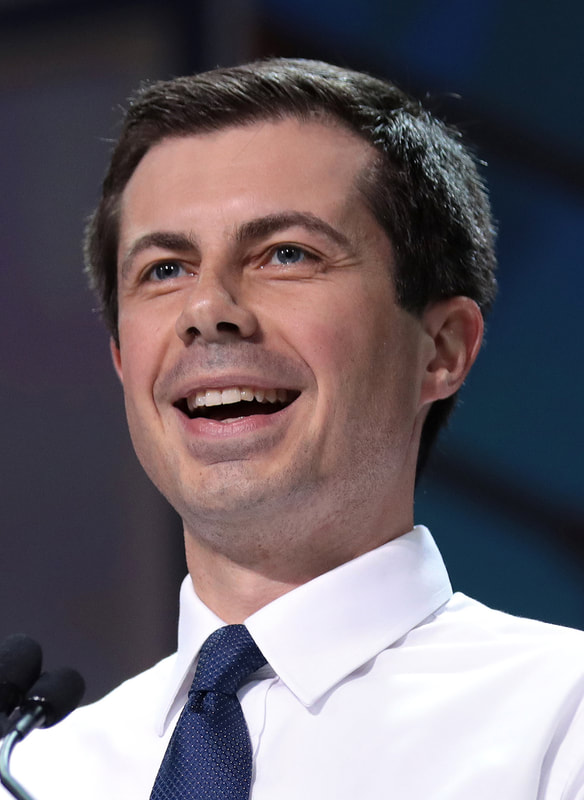
Former Democratic Presidential Candidate Pete Buttigieg -- "Mayor Pete"
|

Former Democratic Presidential Candidate Michael Bloomberg
|
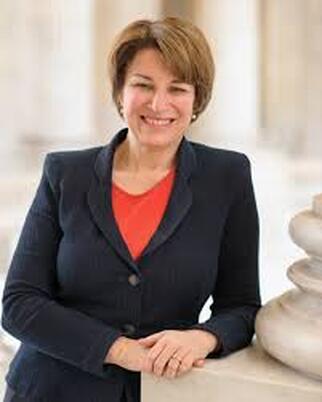
Former Democratic Presidential Candidate Amy Klobuchar
|
Biden talks about son's struggles with mental illness, substance abuse
|
Former Vice President Joe Biden spoke candidly about his son Hunter Biden's struggles with addiction and mental illness in a Monday evening CNN interview alongside his wife Jill Biden. “Beau is my soul, Hunter is my heart,” Joe Biden said, referencing his eldest son, who died of cancer in 2015. “And Hunter’s been through some tough times, but he’s fighting, he’s never given up. He’s the most honorable, decent person I know.” Host Chris Cuomo brought Hunter Biden up in the context of a recent New Yorker piece that detailed his problems with substance abuse, with Joe Biden telling Cuomo that Hunter’s participation in the profile “took enormous courage.” “Everybody has to deal with these issues in a way that’s consistent with who they are and what they are,” Joe Biden said. “The idea that we treat mental health and physical health as though somehow they’re distinct – it’s health." Joe Biden added that, when the White House was developing the Affordable Care Act, “parity between mental health and physical health” was “a fundamental breakthrough in how things should work.” “We’ve seen his struggle and we know most American families are dealing with some sort of struggle like we are, and I think they can relate to us as parents who are hopeful and are supportive of our son,” Jill Biden said. |

|
Bernie Sanders on Tackling Mental Health & Addiction in the US
 Democratic Presidential Candidate Bernie Sanders Democratic Presidential Candidate Bernie Sanders
5. For many people, the initial point of care for their mental health condition or substance use disorder begins with the criminal justice system. What is your plan to advance crisis intervention services in the community while also providing treatment and alternatives to incarceration for those already involved in the criminal justice system?
According to the Department of Justice, one in five inmates in prisons are people with a cognitive disability, while another one in five inmates have a serious mental illness. Instead of incarceration, we should be providing people with disabilities with the services and supports they need to stay in the community, including mental health care and home and community-based services. It is our moral responsibility to make it happen. Bernie believes our nation’s criminal justice system must be reformed and focus on rehabilitation of our citizens, which includes at the federal level, we will establish a new model police training program that reorients the way we do law enforcement in this country. He will require and fund police officer training on implicit bias, cultural competency, de-escalation, crisis intervention, adolescent development, and how to interact with people with mental and physical disabilities. Instead of spending $80 billion a year on jails and incarceration, we are going to invest in health care, jobs, and education for our young people. It is an international embarrassment that individuals with mental health conditions do not have access to adequate health care outside and also in the criminal justice system. As President, Bernie will make sure all people have guaranteed health care and he will reform our broken criminal justice system to end the overwhelming criminalization of poor people, people of color, and people with mental health conditions. . . . 7. How will you fulfill the intent of the Community Mental Health Act of 1963, a law that meant to ensure that people have access to mental health and developmental disability care within their communities rather than in institutions? Every person with a disability deserves the right to live in the community and have access to the services and supports they need to pursue the American dream. It is our moral responsibility to make it happen. No one should have to choose between being taken out of their homes and communities or being denied the support they need to survive and thrive. As President, Bernie will end the institutional bias that forces people with disabilities out of their communities by passing the Disability Integration Act, of which Bernie is a proud cosponsor, and enacting Medicare for All, community-based mental health care and home and community-based supports as services, without asset or income restrictions to all. And under Bernie’s administration, the Olmstead decision will be vigorously enforced through the Department of Justice Civil Rights Division, reversing the Trump Administration’s disgraceful rollback of disability rights enforcement. 8. Poverty is associated with very poor outcomes for people with mental health or substance use disorders, primarily due to lack of secure housing and employment opportunities. What will you do to ensure that income is not a barrier to recovery? Bernie believes we must recognize that in the 21st century, in the wealthiest country in the history of the world, economic rights are human rights. We must guarantee everyone in our country basic economic rights – the right to quality health care, the right to as much education as one needs to succeed in our society, the right to a good job that pays a living wage, the right to affordable housing, the right to a secure retirement, and the right to live in a clean environment. To guarantee housing a human right, he will ensure that every person has affordable, accessible housing. He will build the 7.4 million affordable units to fully close the affordable housing gap. He will fully fund Section 8 rental assistance and guarantee vouchers to everyone eligible for the program without waitlists. He will end homelessness in America by building permanent supportive housing and connecting homeless people to available services. He will raise the minimum wage to a living wage of $15 an hour and enact a federal jobs guarantee to ensure everyone is guaranteed a job that pays a living wage. Bernie’s Medicare for All program will guarantee comprehensive health care, which includes substance abuse and mental health services, as a human right to all people, regardless of income. . . . 9. People of color, immigrants, Veterans, people living in poverty, people who identify as LGBTQ+, and others have unique needs and challenges as it relates to mental health and addiction. What will you do to ensure that these and other underserved groups have access to the mental health and addiction resources and supports that they need? Bernie’s Medicare for All program will guarantee comprehensive health care, which includes substance abuse and mental health services, as a human right to all people, regardless of income, race, sexual orientation, gender identity, or immigration status. He understands that one policy alone will not solve this crisis. Both his plans and his record show that he will address this issue with the urgency it deserves. Specifically, his plan requires the Department of Health to conduct an evaluation of health disparities, including racial and geographic disparities, and to submit a plan to Congress for addressing the disparities found in the evaluation. It also creates an Office of Primary Health to increase access to care including mental health care. It also includes training the workforce we need to address these disparities. His Medicare for All plan includes explicit language that bans providers from discriminating against patients, including discrimination based on race, color, gender, and pregnancy, and allows courts to award damages to patients if this is violated. He will dramatically expand access to community health centers which provide primary medical, dental, and mental health care, as well as low-cost prescription drugs, to more than 28 million Americans. And he will significantly expand the National Health Service Corps and Teaching Health Centers to recruit and train mental health providers to deliver culturally competent care in underserved communities. 10. Given that overdoses and suicides are decreasing US life expectancy, evidence-based treatment options are critical, but treatment options are still limited. What role do you see research playing in improving mental health and addiction treatments? Bernie believes we need to make significant investments in health research, including robust mental health and addiction research funding. Bernie strongly supports additional funding for the NIH. He also believes that a comprehensive health research agenda should include not just the necessary financial support for disease-specific research, but must also consider our long-term investments in science education and how we can broadly support the next generation of scientists tackling some of the greatest medical challenges of our time. Medicare for All removes the bureaucratic nightmare from providers’ daily practice and lets providers do what they were trained to do: provide care. For providers: that means no more spending a significant part of your day filling out forms and arguing with insurance companies. No more having to navigate getting reimbursed by many different insurance companies. This is especially important for mental health providers, the vast majority of whom are self-employed. By eliminating the predatory, wasteful, and restrictive private insurance system, and replacing it with a universal, comprehensive, Medicare for All program, Bernie will empower every American to seek the care they need, regardless of their income. The amount of medical research and quality improvement that could be done with data from a national, public single payer system will be transformative. With a renewed focus on research and quality improvement, the US can finally focus on improving population health, and stop lagging behind other countries on health outcomes. |

|
Americans have failed people with mental illness. Trump’s new budget will change that.
|
By Joe Grogan Joe Grogan is assistant to the president and director of the Domestic Policy Council. President Trump is exceptionally focused on fighting for Americans who can’t fight for themselves and confronting problems other administrations, Democratic and Republican, have ignored. This is particularly true for Americans who suffer from addiction and serious mental disorders. In this year’s budget, President Trump is proposing the boldest reform in decades for the millions of Americans who live with serious mental illness. This administration has already led the way on combating the drug addiction crisis. President Trump directed the declaration of an opioid public health emergency in 2017 and took action to confront the driving forces behind the crisis. Last week, the National Center for Health Statistics reported a decline in drug overdose deaths for the first time in 28 years. Life expectancy rose for the first time in four years. Now, we must end the disgraceful way Americans with serious mental illness are treated. They are not receiving the care they desperately need. In 2018, 47 million people experienced some form of mental illness. More than 11 million of these Americans lived with mental illness of such severity that it impaired their ability to carry out normal life functions. And nearly 4 million Americans received no treatment at all. This is unacceptable. In the 1950s, there were more than 550,000 state psychiatric hospital beds in the United States. By 2016, this number had dropped to 37,679. Instead of receiving care, the sick are locked behind bars, often after encounters with police officers ill equipped to manage these encounters effectively. There are more than 392,000 incarcerated individuals with serious mental illness. That means there are 10 times more individuals with serious mental illnesses in prison beds than in state psychiatric hospital beds. We see the result of this crisis every day in America’s cities. There are at least 111,122 individuals with serious mental illness who are homeless, including 52,180 who have no form of shelter. We walk right past them as they suffer from exposure to the elements, inadequate nutrition, poor hygiene and lack of protection from violent thugs. The areas where these Americans live can also become public health nightmares when conditions there facilitate the spread of communicable diseases. It is not compassionate, and it is not humane to discard these citizens and ignore their suffering. That is why the president declared at the first White House Summit on Mental Health, “My administration is strongly committed to helping Americans suffering from mental illness.” And the administration has already taken action. Last year’s funding bill provided $3.9 billion for mental health programs, a $328 million increase. We invested in evidence-based programs including early detection, assisted-outpatient treatment and supported our law enforcement professionals. Finally, the administration solicited and approved the first-of-their-kind demonstrations for states to improve access to the full continuum of care these individuals desperately need. But more remains to be done: President Trump is proposing to modify the outdated Institutions for Mental Disease payment exclusion, the long-standing Medicaid policy that prohibits federal reimbursement for many Medicaid-eligible patients who receive care in certain inpatient facilities dedicated to mental disease. These important changes will provide more than $5 billion in new federal funding to states that ensure a full continuum of care is in place to assist in getting people with serious mental illness the care they need and, in many cases, off the streets and out of prisons. |

We think politicians are recognizing Mental Health and Substance Use Policy as a HUGE ISSUE. Politicians are starting to incorporate ideas from DIVERSE SOURCES. That's a good thing. We need more of it. We will be profiling the ideas of other presidential candidates in the near future. |
FORMER CANDIDATES & IDEAS WORTH KEEPING
Mayor Pete: HEALING AND BELONGING IN AMERICA
A Plan to Improve Mental Health Care and Combat Addiction
|
This crisis is the result of years of neglect by our political leadership.
Our health care system is so broken—and our approach to mental health and addiction care so fragmented and often punitive—that less than one in five people with a substance use disorder and two of every five people with a mental illness receive treatment. The annual economic cost of the opioid epidemic is almost $80 billion a year. To meet this urgent national challenge, we need a new approach to providing mental health care: one truly prepared to tackle this as the crisis it is, and one that understands the key driver of change will be based in strengthening our communities. "Pete understands that as a nation, we must begin to take mental health more seriously. All of us either live with these illnesses or may in the future, or we know someone who does. And for hundreds of thousands of us, it is a matter of life and death." Pete’s vision for the future of mental health and addiction care is rooted in embracing prevention and ensuring that every person with a mental illness or a substance use disorder has the resources and support they need to begin to heal.
We will ensure that at least 75% of people who need mental health or addiction services receive the care that they need, an increase of more than 10 million in his first term, and prevent 1 million deaths of despair by 2028. In order to help those who heal remain well—and to build Americans’ resilience to these illnesses—we must ensure that everyone feels that they belong in their community and in our country. |
Democratic Presidential Candidate Pete Buttigieg -- "Mayor Pete"
Heal
Belong
|
Elizabeth Warren on Mental Health & Substance Use Policy
|
5. For many people, the initial point of care for their mental health condition or substance use disorder begins with the criminal justice system. What is your plan to advance crisis intervention services in the community while also providing treatment and alternatives to incarceration for those already involved in the criminal justice system? I start with a basic principle: health care is a human right that no person should be denied. Under Medicare for All, we’ll provide continuous access to critical mental health care services, decreasing the likelihood that the police will be called as a matter of last resort. We also have to change how police work is done. Police officers have become America’s de facto first mental health providers. People with mental illnesses aren’t incarcerated at higher rates because they are prone to violence. To the contrary, most are arrested for non-violent offenses, many because they lack access to necessary services. Instead of shuttling people into a system not built to meet their needs, we should invest in preventing people from reaching those crisis points in the first place. I’ll invest in “co-responder” initiatives connecting law enforcement with mental health care providers and pilot evidence-based crisis response efforts to provide needed services to individuals struggling with mental illness. We also need to make sure that people who are incarcerated are treated with basic dignity and respect –including those with mental illness. That means taking a comprehensive approach to incarcerated people who face mental health and addiction challenges, including requiring an adequate number of counselors and addiction specialists, individualized treatment, and increased access to medication-assisted treatment. I co-sponsored the Comprehensive Justice and Mental Health Act, which sought to facilitate collaborative mental health supports for people who have come into contact with the criminal justice system. And I’ve called to eliminate solitary confinement, which provides little carcerative benefit and has been demonstrated to harm prisoners’ mental and physical health. I’ll direct the Bureau of Prisons to establish a set of standards and reforms to protect the most vulnerable in our prison system without confining a person for more than 20 hours a day. 6. The Mental Health Parity and Addiction Equity Act (Federal Parity Law) was enacted in 2008, yet some insurers continue to illegally deny coverage of care for mental health and addiction treatment services. How will you ensure enforcement of the Federal Parity Law? Health care is a human right – and that means mental health just as much as physical health. That’s part of why I support Medicare for All, which would provide comprehensive coverage, including for mental health care and substance use treatment, to all Americans. Despite the widespread current need for mental health services, in 2018 less than half of people with mental illness received treatment and less than a fifth of people who needed substance use treatment actually received it. We must guarantee health coverage, and we also should fight to ensure that no person faces illegal discrimination when seeking behavioral health care as we transition to Medicare for All. Congress banned discrimination like this in 2008, when it passed the Mental Health Parity and Addiction Equity Act to require insurance companies to adhere to the same standards of coverage for behavioral health as for other health conditions. Yet it persists, due to weak oversight and little real recourse for patients. As president, I will launch a full-scale effort to enforce these requirements – with coordinated actions by the IRS, Centers for Medicare and Medicaid Services, and Department of Labor to make sure health plans actually provide mental health treatment in the same way they provide other treatment. In the transition to Medicare for All, I’ll work to expand Medicaid in states that have yet to do so and in U.S. territories to expand access to critical mental health services. And I will work to enact my Behavioral Health Coverage Transparency Act, which would strengthen enforcement of existing mental health parity laws by increasing mandatory federal audits of health plans, require insurance companies to disclose how they make decisions on behavioral health care coverage, and establishing a Consumer Parity Portal to help patients navigate the system. |

Democratic Presidential Candidate Elizabeth Warren
|
Amy Klobuchar's Plan to Combat Addiction and Prioritize Mental Health
|
Amy is proposing a plan to combat substance use disorder and prioritize mental health, including launching new prevention and early intervention initiatives, expanding access to treatment and giving Americans a path to sustainable recovery.
Amy’s dad struggled with alcoholism and she saw the toll that substance use disorders can take on families and communities. Her dad climbed the highest mountains but also sank to the lowest valleys because of his battle with alcoholism. He had three DWIs and after the third he got real treatment and was, in his own words, “pursued by grace.” Faith, treatment, friends, family and the community of people who stood by him made all the difference. Substance use and mental health disorders do not discriminate. Everyone knows someone who struggles. Opioid overdoses — including overdoses of prescription opioids, heroin, and synthetic opioids like fentanyl — kill more Americans than car crashes each year. Nearly half of Americans have a family member or close friend who’s been addicted to drugs. And 1 in 5 Americans experiences a mental health condition. As President, Amy will take action with a $100 billion plan so that everyone has the right — and the opportunity — to be pursued by grace and receive effective, professional treatment and help. Prevention and Early Intervention ● Promote early intervention for mental health disorders and drug use: Amy will launch a nation-wide campaign to support prevention and early intervention strategies for people with substance use disorders, alcoholism and mental health illnesses. She will expand funding for states and localities to detect and respond to mental health conditions, including mental health programming and resources for schools and school counselors, as well as training for pediatricians and primary care physicians. She will also lead new initiatives focused on the risks of alcohol and alcohol addiction and support school and community drug early-intervention programs. While opioid use has skyrocketed, other drugs continue to wreak havoc on communities across the country. The rate of cocaine-related overdose deaths among black Americans is as high as that for opioids among white Americans. Funding for prevention and early identification of substance use disorders — including the use of cocaine and methamphetamine — will be driven by needs in the hardest hit communities. ● Launch a nationwide suicide prevention and mental health awareness campaign: Amy will increase investments in state and local suicide prevention initiatives, including a focus on veterans, farmers, LGBTQ and tribal communities. To expand the tools and data available in this fight, Amy will invest in suicide prevention programs, expanded resources and health services that address suicide among students and share information with parents, mental health research and data reporting. ● Prevent opioid addiction: Opioid addiction can begin with the use of appropriately prescribed pain medications. That’s why Amy will prevent doctor shopping by supporting the mandated use by doctors and pharmacists of prescription drug monitoring programs, which is a bill she leads in the Senate. She will also make a major investment into research and development of pain alternatives to opioids. And to build upon successful federal and local drug take-back programs, Amy will launch a national effort to create additional safe and responsible ways to dispose of unused prescription medications and controlled substances in every urban and rural community. In 2010, Amy led and passed the bipartisan bill with the first major expansion of federal drug take-back programs. ● Tackle alcoholism and prevent drunk driving: Amy will support incentives for state governments to enact ignition interlock laws for those convicted of drunk driving to help reduce repeat offenders. Since problems with alcoholism often start early, Amy will support educational initiatives that focus on the risks of alcohol as well as early identification and treatment of alcoholism. Treatment ● Expand access and increase beds for mental health, alcohol and drug treatment services: In 2017, an estimated 21 million people needed substance use treatment, but fewer than 20 percent were able to access it. Under her plan, Amy will expand access to treatment and recovery services by increasing the number of beds in mental health and substance use treatment centers, supporting public and nonprofit entities, expanding Certified Community Behavioral Health Clinics and treatment facilities,[i] investing in treatment services in the hardest hit communities and launching an aggressive national awareness campaign to combat stigma associated with seeking treatment for substance use and mental health conditions. Amy will also target increased investments in early intervention and treatment programs for drugs including cocaine and methamphetamine. ● Expand health care coverage for mental health and substance use, build a more integrated health care system, and enforce mental health parity: Mental health is as important as physical health and Amy’s plan will build a health care system that integrates mental and physical health care. She will protect mental health and substance use coverage as essential health care benefits and enforce federal laws like the Affordable Care Act and the Wellstone-Domenici Mental Health Parity Act that she helped pass to ensure health insurance companies cover all mental illnesses and substance use disorders in the same way they do physical illnesses.[ii] In the Senate, Amy introduced and passed the bipartisan Anna Westin Act, which increases awareness and early detection of eating disorders and requires insurers to cover residential treatment. As part of her plan, she will make major investments in increasing access to community-based services, telehealth and a fully integrated health system, while also making inpatient services available to more people by permanently repealing Medicaid’s “IMD Exclusion,” which prohibits Medicaid reimbursements for those receiving mental health or substance use care in facilities with more than 16 beds. ● Invest in research to develop effective substance use and mental health treatments: Research is critical to our success not only in understanding the dynamics of addiction and mental illness, but also in how to treat it. Despite significant strides in research, there are still gaps in our understanding of the interrelation between the brain and substance use disorders. Amy will make a dramatic federal investment in the National Institutes of Health for research on the impact of substance use on the brain and body and the development of safe treatments. She will also invest in public health surveillance and biomedical research to help develop the most effective substance use treatments. ● Improve training for health care professionals and address workforce shortages: Combating mental health conditions and substance use disorders requires a workforce with the training to provide the highest level of care. Amy’s plan will support improved training for mental health and substance use health professionals, including training for health care professionals to administer medication-assisted treatment (MAT). And mental health and addiction services are often lacking in rural and urban communities where accessibility, availability, affordability and acceptability may be limited. For example, 65 percent of non-metropolitan counties do not have a psychiatrist and almost half of non-metropolitan counties do not have a psychologist. Amy will expand access to mental health and substance use care, including support for clinics and community-based services, as well as technical support and telehealth services. She will also focus on recruitment, retention, training and workplace protections for the mental health and substance use health care workforce in rural areas and our hardest hit communities. Justice, Economic Opportunity and On-going Recovery ● Prioritize mental health and substance use treatment over jail for non-violent offenders: As the former Hennepin County Attorney, Amy was committed to helping people struggling with addiction stay out of the criminal justice system. As the County Attorney, she worked to provide specialized supports and services for those with mental illnesses and severe chemical dependency by building stronger collaboration among drug court staff, probation officers, case managers and various treatment and social service providers. As President, Amy will increase federal support for drug courts, mental health courts and treatment alternatives to incarceration and expand wraparound services and regular follow-ups. In the Senate, she has advocated for expanding drug courts and reducing racial disparities in sentencing. Read more about Amy’s criminal justice reform and clemency proposal here. ● Train and equip law enforcement officers to address challenges including crisis intervention: About 1 in 10 police calls involve someone who has a mental illness, and yet many police officers do not have the training they need to handle these calls or respond in a crisis situation. Amy will work with local and state authorities to ensure that crisis intervention is a core part of law enforcement officer training, and expand crisis intervention training to public health departments, first responders and school personnel. Amy will also provide funding for state and local agencies to equip first responders with life-saving naloxone, an effort she led as one of the four original sponsors of the Comprehensive Addiction and Recovery Act. She will also direct the federal government to negotiate a discounted price for naloxone and promote law enforcement efforts to follow up with people and direct them to harm reduction services. In addition, Amy will increase access to medication-assisted treatment (MAT) in federal prisons and expand treatment in state and local prisons. She will also work with law enforcement to help stop dangerous synthetic opioids from being shipped from foreign countries to the United States. ● Provide economic and housing opportunities and support on-going recovery in communities: For those recovering from addiction, including formerly incarcerated people, a job can support recovery, provide income and a sense of purpose. Yet the unemployment rate among those who are recovering is more than twice the national rate. Amy will invest in training, employment and social services that connect people recovering from substance use disorders to housing and economic opportunity. In addition, Amy will significantly expand access to transitional or supportive housing and homeless shelters that can help people with mental health issues and prevent homelessness. She will also invest in existing and new recovery community organizations that meet the on-going needs of people as they return to work, school and their families. To pay for her plan, Amy will hold opioid manufacturers responsible for their role in the opioid crisis. She will place a 2 cent fee on each milligram of active opioid ingredient in a prescription pain pill to be paid by the manufacturer or importer, establishing a permanent revenue stream that will be used to provide and expand access to substance use and mental health treatment. And she will make opioid manufacturers pay their fair share to fix the crisis they helped create by crafting a Master Settlement Agreement that provides money directly to the states for the cost of addiction treatment and social services. The plan will also be paid for by requiring hedge fund managers to pay their fair share of taxes on investment earnings and by ending pharmaceutical company tactics that prevent generic competitors from entering the market. |
|
Mike Bloomberg on Mental Health Policy
|
Mike’s Plan: Make mental health services more affordable Mike will enforce mental health parity laws to ensure that insurance companies are providing beneficiaries with comprehensive mental health services and making copays affordable. Increase mental health screenings in school and primary careMike will make sure that school personnel receive effective training for how to identify and help youth in crisis. In primary care, Mike will improve screening and treatment for depression, including for adolescents, and will make sure that residency programs for the appropriate specialties train providers in suicide prevention. Mike will also expand community training for doctors and psychiatric nurses and will increase the number of practicing psychiatrists and psychiatric nurses in rural areas. Emphasize suicide prevention Mike will increase funding for national suicide prevention programs through the Substance Abuse and Mental Health Services Administration, which partners with state and local groups to run the national suicide prevention hotline. Mike will also encourage public-private partnerships with groups like Crisis Text Line that provide text services and counselors to help people in crisis. Veteran suicide prevention Mike will expand Defense Department suicide-prevention programs by improving data collection, outreach and mental health screening. Mike also will authorize Veterans Affairs to hire more mental health care providers, increase the number of sites where veterans can access telehealth services, and better connect every service member transitioning from military to civilian to VHA health care. Increase supportive housing To help those suffering from mental illness that has led to homelessness, Mike will expand permanent supportive housing, which provides stability to the chronic homeless. He will also provide services to address substance use disorders and help people move on to independent living. Pass a national red flag law Mike will instate a national red-flag law to allow family members to get a judge’s order to temporarily remove firearms from people who seem likely to harm themselves or others. He will also use 48-hour waiting periods for gun purchases to help prevent impulsive suicides. Improve the economic outlook to reduce stress to American families Poor mental health doesn’t occur in a vacuum. There is a lot of evidence that anxiety and depression are correlated with financial stress. Mike’s agenda for America will create more good jobs with good pay to improve the financial, mental, and physical health of Americans. Learn more about Mike’s Mental Health and Suicide Prevention plan Mike’s Record:As mayor of New York City, Mike made it a priority to invest in mental health care. In 2005, Mike launched WeCare, a program that gave low-income New Yorkers who faced barriers to employment – such as mental health problems – help in searching for and getting jobs. Mike launched a $1.3 billion city hospital capital improvement program — the largest capital improvement plan in the city’s history — which included expanding mental health care services for New York City residents. Mike also formed a partnership with city hospitals to improve trauma services for children in the welfare and the juvenile justice systems. |

How Mike Will Get it Done:
|